
Powered By


Long story short- demyelinated nerve fibers
While spasticity severity often correlates with overall disability, some patients may experience severe spasticity without significant weakness, suggesting that different neural mechanisms may underlie various manifestations.
Spasticity can significantly impact mobility, increase fatigue, contribute to pain and sleep disruption, and may lead to contractures and pressure sores if untreated.
It can also affect quality of life, emotional well-being, and daily functioning, including employment and relationships.
The condition may worsen with environmental triggers such as temperature changes, infections, fatigue, tight clothing, or sudden movements.
Management strategies are multifaceted and include physical therapy, stretching, range-of-motion exercises, and aquatic therapy, which can help maintain flexibility and reduce muscle tension.
Devices such as orthoses (e.g., ankle-foot orthoses) and braces are used to prevent contractures and support posture.
Medications like baclofen are commonly prescribed, with options for oral administration or intrathecal delivery via implanted pumps for severe cases.
Complementary approaches such as relaxation techniques, acupuncture, and cooling after exercise may also provide relief.
Emerging treatments, including nabiximols (a cannabis-based medication), are being explored for their potential to manage spasticity and associated symptoms simultaneously, offering a possible advantage over polytherapy.
The assessment of spasticity often relies on clinical tools such as the Ashworth Scale or its modified version, which measure resistance to passive stretch and help quantify severity.
Patient-reported outcome measures like the Numeric Rating Scale for Spasticity (NRS-S) and the Multiple Sclerosis Spasticity Scale-88 (MSSS) are also used to capture the subjective experience of spasticity and its impact on daily life.
As research advances, new methods such as elastography imaging may improve the precision of spasticity measurement.
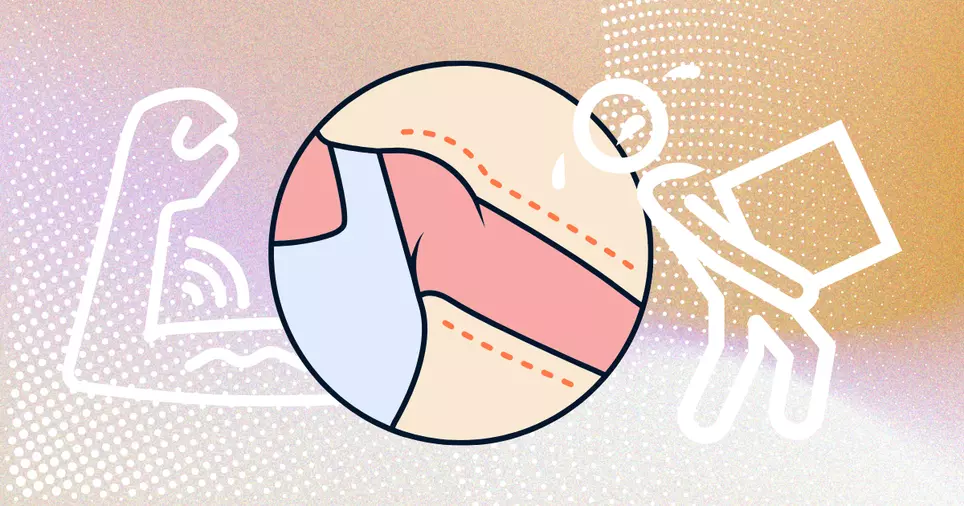
Spasticity is a common and often disabling symptom of multiple sclerosis (MS), affecting 60–84% of patients.
It is characterized by a velocity-dependent increase in muscle tone, resulting in stiffness, tightness, and involuntary muscle contractions or spasms.
This condition arises due to demyelination along the corticospinal tract, which disrupts the normal inhibitory control of spinal reflexes, leading to hyperexcitability of motor pathways.
Spasticity typically affects the legs, including the calves, thighs, groin, and buttocks, but can also involve the back and other muscle groups.
The symptom is not isolated; it is frequently accompanied by a cluster of other related symptoms, forming what has been termed the "Spasticity-Plus syndrome".
This syndrome includes pain (reported in 91.8% of patients in one study), spasms or cramps (79.4%), fatigue (76.7%), sleep disturbances, bladder dysfunction, tremor, and joint tightness.
These associated symptoms are thought to share a common pathophysiological basis, possibly linked to conduction block and ephaptic transmission in demyelinated nerve fibers.
As it says there are a few reasons but as @A MyMSTeam Member said that demyelination I’m assuming underlying mechanisms that tell us to rest. I enjoy doing the pt weights and bands it helps with that . Makes me stronger. Hope this helps.

Why are my legs feeling heavy?
Heavy legs are a common symptom in MS that many describe as feeling like cement blocks, weights, or as if they're dragging wood around. This heaviness can make walking difficult and contribute to balance problems.
Several factors can cause this sensation:
Lack of muscle use - When muscles Show Full Answer



 Join
Join





 Your Privacy Choices