
Powered By



 Continue with Facebook
Continue with Email
Continue with Facebook
Continue with Email
Many people think of fatigue as something that goes away with rest or a good night’s sleep. But for people living with multiple sclerosis (MS), fatigue can be overwhelming, sudden, and disabling. And it’s not always obvious to those on the outside. About 80 percent of people with MS experience fatigue, including many on MyMSTeam.
Sign up to view the results!
Continue with Facebook
Continue with Email
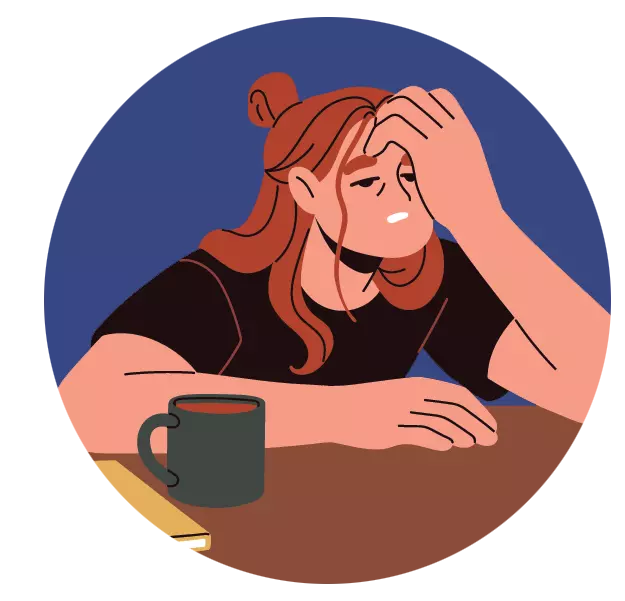 We reviewed more than 1,500 comments from MyMSTeam members about fatigue. Members describe it using powerful imagery — walls, weights, mud, drained batteries — because ordinary words don’t quite capture the experience. It can affect the body, the brain, emotions, and daily life all at once.
Here are some of the most common ways MyMSTeam members describe how MS fatigue feels.
One of the most frustrating parts of MS fatigue is how abruptly it can show up. Many MyMSTeam members say they feel fine one moment and then suddenly can’t continue what they’re doing.
As one MyMSTeam member shared, “I could be getting stuff done and BAM!! That brick wall hits, the legs stop, and if I don’t sit or lie down, I’ll hit the ground.”
Another member said, “MS fatigue, for me, is feeling like you have literally hit a brick wall.”

For some, the crash comes with flu-like exhaustion: “Feels like I have hit a brick wall and have the flu out of nowhere.”
This sudden stop can make planning difficult, which is part of what makes MS fatigue so disruptive.
Many members describe fatigue as a physical heaviness — as if their bodies are weighed down or pulled toward the ground. One MyMSTeam member wrote: “It feels like I’m wearing a 1,000-pound invisible blanket dragging me to the floor.”
Another explained, “Like wearing a lead suit. With a set of lead boots. Add lead gloves and a lead fanny pack at the base of your spine!”
Others compared it to feeling resistance with every movement: “For me, fatigue is like being submerged in a vat of thick mud where it becomes an effort to move any part of me.”
This heaviness isn’t just uncomfortable. It can make standing, walking, or even lifting your arms feel nearly impossible.
Another common way members talk about MS fatigue is as a total loss of energy, like a battery that suddenly runs out. One MyMSTeam member shared, “When I hit the wall, it feels as though my battery is drained.”
Another described it like this: “I either say my battery is drained or I feel like somebody pulled the plug.”
Once the energy is gone, pushing through may not be an option. Trying can sometimes make symptoms worse.
MS fatigue often turns everyday activities into major challenges. Tasks that once felt automatic can require enormous effort. As one member explained: “Making the bed is a task!”
Another MyMSTeam member described fatigue as weakness rather than sleepiness: “So ‘weakness’ is a better term — like no energy, and it keeps me from walking more than a few steps.”
This can be especially frustrating because your effort may not be visible to others. From the outside, it may look like you’re “not doing much,” even though your body feels pushed to its limits.
Many members say fatigue changes how their brain functions, making it hard to think, focus, or communicate.
One member shared, “Normal people don’t realize what it feels like. Your brain can’t function properly. It is like being drugged.”
Another described a mix of mental clarity and physical shutdown: “My brain still works mostly, but all four of my limbs are painfully asleep AND have heavy lead weights holding them down.”
Unlike typical tiredness, MS fatigue often doesn’t improve with sleep. This can create a difficult cycle of feeling exhausted all day and never fully recharged.
One MyMSTeam member shared, “It’s like waking up and feeling worse than when I went to bed.”
Some members also notice how quickly fatigue takes over when they stop moving: “I don’t drive anymore, and like a baby, as soon as my wife’s car hits the highway, I conk out.”
For many people with MS, fatigue is not localized. It affects everything at once. As one member described, “I am unable to function. So tired, on another planet. I need to go to bed.”
Another compared it to being constantly sick: “Every day feels like having a constant cold — the same exhaustion, without the sniffles.”
Mobility is closely tied to fatigue for many MyMSTeam members. When energy drops, walking and balance can quickly become unsafe.
One member explained, “The best way I have found to describe it: It’s like trying to walk up a steep hill with 20 pounds on your back.”
Another shared, “I often describe my level of fatigue as trying to walk through knee-deep, freshly poured concrete, and as I walk the cement is hardening.”
These sensations can increase the risk of falls and may limit how far or how long someone can move safely.
MS fatigue can be invisible, unpredictable, and hard to put into words. That’s why many members find comfort in seeing their own experiences reflected in others’ descriptions. If these quotes resonate with you, you’re not imagining it — and you’re not alone.
If fatigue is affecting your daily life, consider talking with your healthcare provider about what you’re experiencing. Keeping track of when fatigue hits, what it feels like, and how it affects your body and thinking can help guide those conversations.
On MyMSTeam, people share their experiences with multiple sclerosis, get advice, and find support from others who understand.
How would you describe what MS fatigue feels like? Let others know in the comments below.
Get updates directly to your inbox.



 Continue with Facebook
Continue with Email
Continue with Facebook
Continue with Email
Continue with Facebook
Continue with Email
Continue with Facebook
Continue with Email
Become a member to get even more





 Join
Join




 Your Privacy Choices

This is a member-feature!
Sign up for free to view article comments.
@A MyMSTeam Member same here, fatigue has taken over my life. I have days that I'm back in bed within an hour and don't even remember falling asleep because it's so fast. My body and brain are so… read more
We'd love to hear from you! Please share your name and email to post and read comments.
You'll also get the latest articles directly to your inbox.