
Powered By

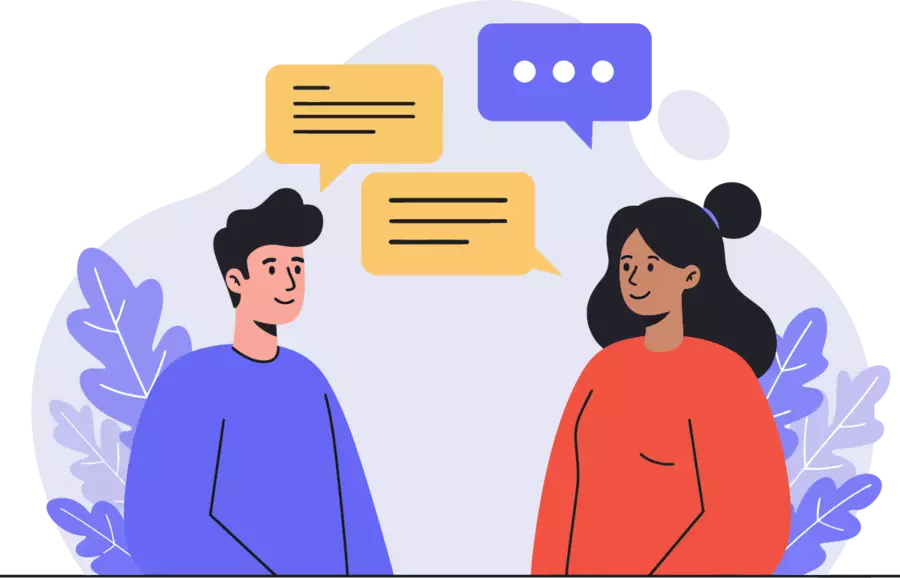
Have you ever wished others really understood what MS is like? Talking about multiple sclerosis with friends, family, or co-workers isn’t always easy — especially when symptoms can’t be seen. In conversations on MyMSTeam, members share real-life tips for navigating these discussions in ways that feel honest, empowering, and manageable. Here, we’ve gathered the advice shared across these conversations into helpful insights you can learn from.
 What Members Are Saying
Many members say it helps to lean on analogies, metaphors, or even a bit of humor, as tools to translate MS into something people can picture or feel. Try explaining that life with MS is like an iceberg. There’s a lot going on below the surface.
What Members Are Saying
00:00:00:00 - 00:00:11:19
Jacqui Blue
There is a path for you to have a fulfilling and successful life, and that is through learning these steps to being resilient.
00:00:11:21 - 00:00:37:09
Jacqui Blue
I began my college career as an opera singer. I love performing. I love the stage. I love everything about it. I went and got a job at a theater and started incorporating some of the things that I have learned into being a teaching artist for kids. We were teaching these kids that you can combat adverse experiences with these actionable things you can do to be resilient.
00:00:37:12 - 00:01:11:09
Jacqui Blue
Number one is: Accept the things you can’t change and take responsibility for your own emotional well-being. That’s one of the number-one things with MS. Make sure you’re accepting things because you can’t change having a chronic illness, unfortunately, if there’s no cure. Optimism is a big deal, and it can be hard for some people. When you look on the bright side, when you try to find the silver lining, it helps with how you’re thinking about your illness and yourself, and how you’re approaching things. Confronting your fears and talking about emotions,
00:01:11:10 - 00:01:38:06
Jacqui Blue
that’s another one I think is really important. With MS, we tend to have that fear. What happens if I become disabled? And telling your story is a way to have ownership over it, so then the story doesn’t own you. Staying active is very important. You have to keep your muscle mass up. You have to keep learning things. I think that really helps combat depression, which is pretty common with MS.
00:01:38:08 - 00:02:01:10
Jacqui Blue
Seek and accept social support. It can be really a negative health outcome if you are isolating yourself, having people that you’re holding accountable and that are holding you accountable is a big, big deal. Finding a hero or a role model who is resilient, who has bounced back, and is speaking positively on their experience — and you wouldn't think it's that important, but it is.
00:02:01:12 - 00:02:28:05
Jacqui Blue
Altruism is very powerful, and I know that from experience. I see that with how I relate to my sister and other people I know with MS. We are really vigilant with trying to help each other out. When that focus isn’t on the pain or the disadvantage that you’re working from or the fatigue, then it can alleviate, particularly when you’re doing something for other people,
00:02:28:05 - 00:02:39:02
Jacqui Blue
and there’s that joy that comes along with that. My name is Jacqui, and I’m a member of MyMSTeam. Learn more and connect at MyMSTeam.com.
“Telling your story is a way to have ownership over it, so the story doesn’t own you.”
— Jacqui Blue, musician and MyMSTeam Member
Get updates directly to your inbox.


Is it normal to feel extremely fatigued and walking worse and worse balance and anxiety the month when you are to have your infusion


 Continue with Facebook
Continue with Email
Continue with Facebook
Continue with Email
Continue with Facebook
Continue with Email
Continue with Facebook
Continue with Email

 Join
Join




 Your Privacy Choices

This is a member-feature!
Sign up for free to view article comments.
My girlfriend tends to get a testie when I discuss MS with her. She’s had SPMS, transitioning from RRMS in 2017, when she had her last relapse. She doesn’t like it when I mention that some of her… read more
We'd love to hear from you! Please share your name and email to post and read comments.
You'll also get the latest articles directly to your inbox.